
Mamdani at 100 Days
He kind of reminds me of Rudy Giuliani

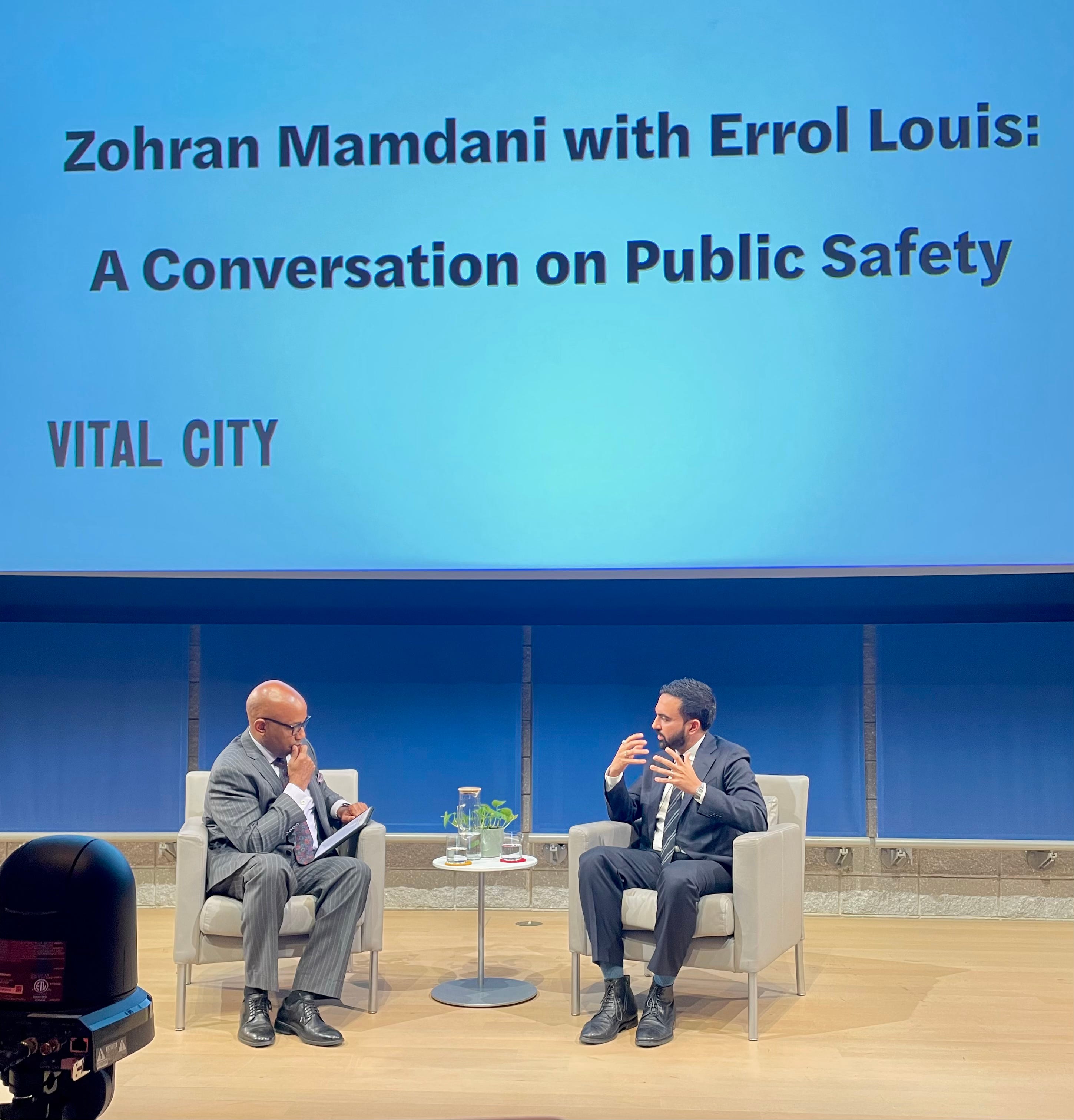
100 days into Zohran Mamdani’s mayoralty and he continues to be an object of no small fascination. Friends from out of town keep asking me how it’s going. I have my concerns, but generally I think he’s doing OK so far. My standard line has been that I expect Mamdani to be a lot like Bill de Blasio in terms of governance, but that people will assess his performance much more charitably just because they find him more likable than de Blasio.
The other New York City mayor that Mamdani often finds himself compared to is John Lindsay. (Vital City ran a piece by historian Vincent Cannato explicitly making this connection.) If I were Mamdani, I’d be paying close attention to these parallels. As Charles Morris’ history of the Lindsay administration, The Cost of Good Intentions, makes plain, Lindsay’s bold ambitions to remake the city often had negative unintended consequences.
Lindsay and de Blasio are the most obvious parallels to Mamdani from recent decades — all came into office as moralistic crusaders who saw their mission as shaking up the status quo. But there is another New York City mayor who almost never gets compared to Mamdani who also fits that description: Rudy Giuliani.
Obviously, Mamdani and Giuliani occupy very different places on the political spectrum — one a Republican and the other a Democratic Socialist. They are also quite different temperamentally — Mamdani’s default setting is sunshine and light while Giuliani’s is a barely suppressed rage. Neither man would likely embrace the comparison with the other. (Giuliani has called Mamdani an “enemy of America.”)
Still, for all their points of divergence, Mamdani and Giuliani have some important underlying commonalities. In particular, both are masters of what might be called the “Nixon goes to China” maneuver, a move that requires an office holder to have such strong bona fides in a certain policy area that he can get away with gestures that would cause no end of grief for a normal politician. Both Mamdani and Giuliani have benefitted from accumulating a bank of political capital that can then be spent making moves that would be politically costly for anyone else.
In Giuliani’s case, his reputation as a tough guy gave him room to advance ideas that might have gotten another politician branded as “soft.”
Giuliani’s character was forged in conflict. As a federal prosecutor, he had taken on organized crime and political corruption. It can be difficult to remember given his current identity as a Trump crony/apologist, but in the 1990s Giuliani had a reputation not just for pugnacity but also for integrity. He was sometimes even called “the prince of the city.”
On a number of important issues, Giuliani effectively governed like a Democrat. In addition to being pro-choice, his record included support for gay rights and a strong defense of immigration. (“I believe the anti-immigration movement in America is one of our most serious public problems,” he said in 1996.)
On public safety, Giuliani’s signature issue, his law-and-order reputation sometimes provided cover for policymaking that might even be described as liberal (at least at the time). A few examples:
His hand-picked choice of police commissioner, Bill Bratton, brought a reformist spirit to the NYPD, helping to transform an agency that was known for corruption into an international model of accountability and data-driven management.
As mayor of New York, Giuliani was also a gun control advocate, pressing for national gun registration, arguing for bans on assault weapons, and suing gun manufacturers for negligence.
Business improvement districts predate Giuliani in New York, but his administration helped to spread the model, providing neighborhoods across the city with a valuable tool for improving the local quality of life.
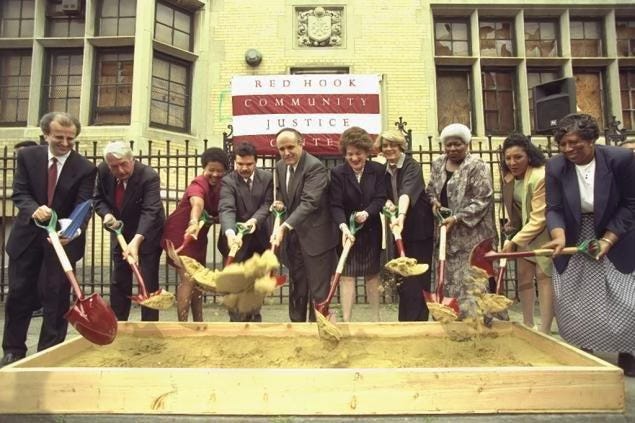
Finally, Giuliani was the mayor who green lit the Red Hook Community Justice Center. This award-winning project (which I was blessed to work on during its early years) has helped reduce recidivism and improved local trust in the justice system.
None of this is to rehabilitate Giuliani — there is plenty to criticize in his record, both during his run as mayor and particularly in the years since. My point is that, despite being known as a conservative, he ended up tacking to the center on a number of fronts.
Today, Mamdani is making similar moves, just coming from the other direction.
Mamdani had a clear identity as a left-wing activist before reaching City Hall. (Or, as President Trump put it, “a 100% Communist Lunatic.”) And yet, at least in his first months in office, what’s notable isn’t how radical Mamdani has been — it’s how many times he has chosen to moderate.
Take policing. Keeping Jessica Tisch as police commissioner was a signal meant to assuage voters who were concerned that Mamdani would not take crime seriously. Tisch has been on the opposite side of Mamdani on a host of contentious issues, including bail reform and the NYPD’s “gang database.” Mamdani was able to make this kind of move without paying a significant political price because no one thinks of him as unprincipled sell-out.
Then there’s Trump. One of Mamdani’s signature successes thus far has been protecting New York City from unwanted intrusion by the president. Mamdani’s charm offensive even included creating a mock newspaper front page in an effort to convince Trump to invest in housing in New York. It is difficult to imagine any other prominent New York City politician getting away with these kinds of gestures without taking enormous heat from the progressive left.
Why have these two very different mayors, contrary to their hard-line reputations, made so many moves to the middle? Some of it is just good politics, of course — their efforts at moderation are designed to blunt opposition and convert persuadable skeptics. But a lot of it comes down to the realities of the job. Being mayor of New York means managing a city of more than eight million people. As Fiorello LaGuardia famously observed, much of the daily work of governance — cleaning the streets, fixing potholes, putting out fires (literally!) — has no obvious ideological valence. The force driving mayors as diverse as Mamdani and Giuliani toward pragmatism isn’t hypocrisy — it’s gravity. It pulls everyone in eventually.
We certainly learned a few details about Mamdani's wife during his first 100 days